
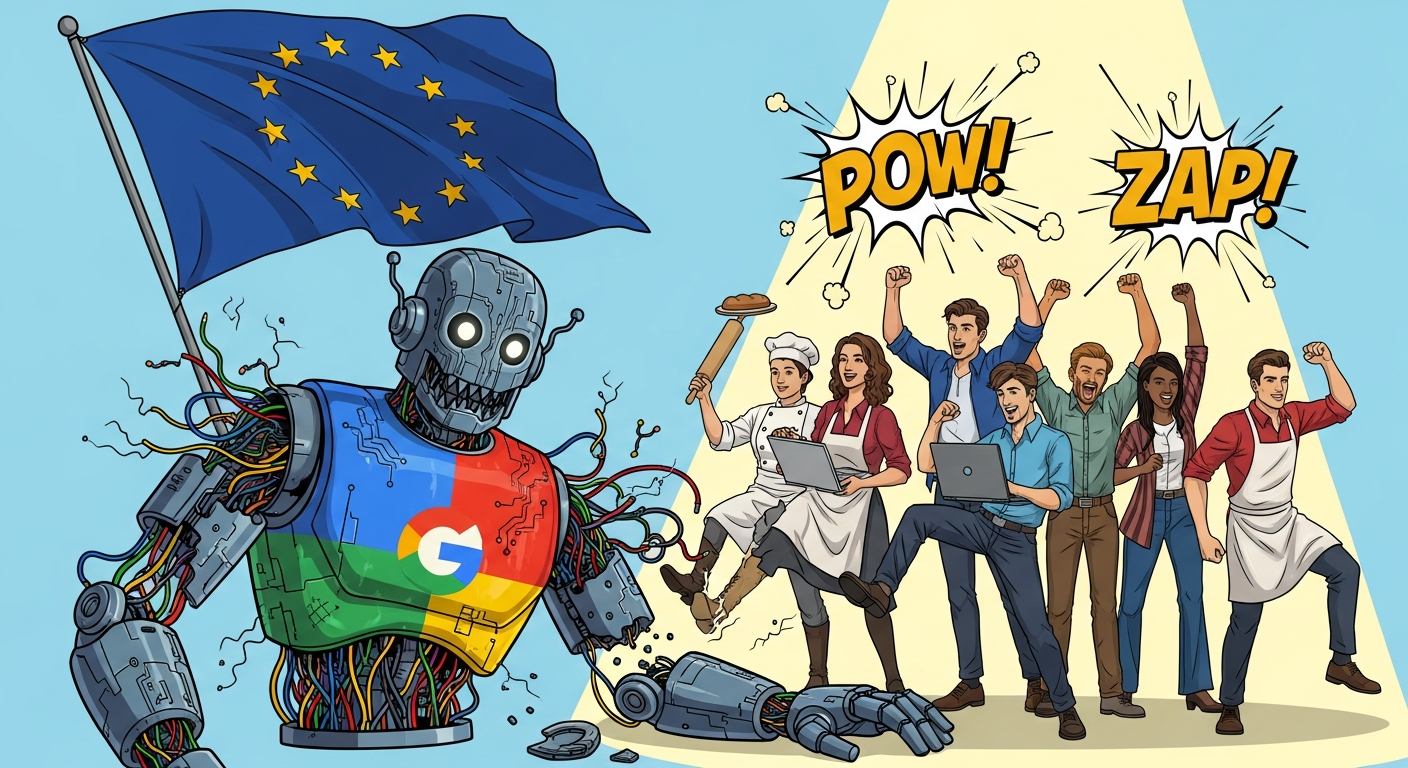
The European Union is taking a firm stance against potential anti-competitive behavior in the AI industry, launching a formal investigation into Google’s use of website content for its AI-powered search features. This investigation highlights the growing tension between tech giants, content creators, and regulatory bodies as artificial intelligence reshapes the digital landscape.
European Commission Targets Google’s AI Content Practices
Despite facing criticism for its implementation of tech and AI regulations, the European Commission has opened a new front in its oversight efforts. The Commission is examining whether Google has violated EU competition laws through its AI Overviews and AI Mode features, which display AI-generated summaries at the top of search results.
The core concern centers on Google potentially using content from websites and YouTube videos without proper compensation to publishers and creators. According to the Commission’s statement, investigators will determine if Google is “harming competition in the AI market by granting itself access to websites’ content, and imposing unfair terms and conditions on publishers and content creators.”
The investigation specifically questions whether Google leverages its dominant position in search to pressure content creators into allowing their work to be used for AI training and generation without fair compensation or the ability to opt out without losing access to crucial distribution channels.
Power Imbalance and Market Dominance Concerns
At the heart of the EU’s investigation is Google’s overwhelming market power. As the gateway to most web traffic, Google places content creators in a difficult position: allow their material to be used for AI features or potentially lose visibility in search results. Similarly, YouTube creators face a binary choice – consent to having their videos used for AI training or lose access to the platform entirely.
The Commission has also highlighted another potentially anti-competitive practice: Google’s restriction preventing rival AI companies from using YouTube content to train their own models. This creates an uneven playing field where Google can leverage its vast content ecosystem while denying competitors access to the same resources.
Broader Context: AI and Copyright Battles
The EU investigation unfolds against a backdrop of intensifying legal battles over AI and content rights. Several major publishers including The New York Times, Chicago Tribune, News Corp, and Merriam-Webster have filed lawsuits against AI search tool Perplexity for alleged copyright infringement.
However, the EU’s approach differs significantly from these private lawsuits. While media companies are primarily seeking compensation through content-licensing agreements, the European Commission is focusing on the structural competitive advantages Google gains through its dominant market position. According to industry reports, Google’s reach allows it to train its AI models on substantially more internet content than competitors, potentially creating an insurmountable advantage in AI development.
EU’s Evolving Approach to AI Regulation
This investigation represents just one facet of the EU’s complex relationship with AI regulation. Despite its aggressive stance on competition issues, the bloc is simultaneously considering simplifying some aspects of its AI rules. Recent proposals suggest delaying the implementation of regulations for high-risk AI applications, reflecting the challenge of balancing innovation with oversight.
The investigation into Google exemplifies the EU’s attempt to maintain competitive markets while allowing technological advancement. By focusing on fair access to content rather than prohibiting AI development outright, regulators are attempting to create conditions where multiple companies can compete on equal terms.
Implications for Content Creators and AI Companies
For website owners, publishers, and content creators, the outcome of this investigation could significantly impact their relationship with tech platforms. A ruling against Google might establish precedent for compensation frameworks or create new opt-out mechanisms that preserve search visibility while protecting content from unauthorized AI use.
For AI companies, the investigation signals increasing scrutiny of training data sources and content licensing practices. Firms developing large language models and generative AI tools may need to develop more transparent approaches to content acquisition and compensation to avoid similar regulatory challenges.
The investigation has no set timeline for completion, and Google has not yet issued a formal response to the Commission’s announcement. However, the outcome could reshape how AI companies interact with content creators across the digital ecosystem.