
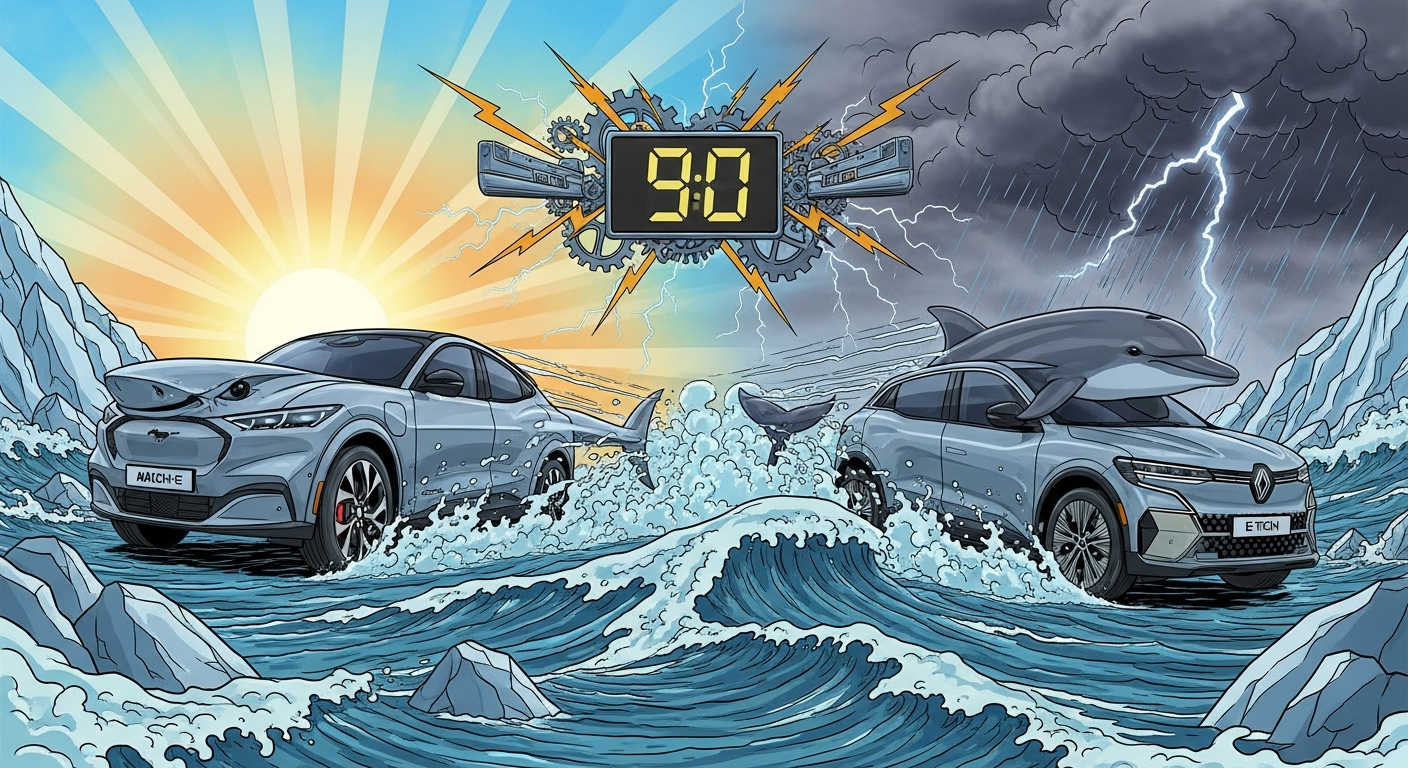
The automotive landscape in Europe is undergoing a seismic shift, with traditional manufacturers facing unprecedented challenges from Chinese electric vehicle makers. Ford Motor Company, recognizing the existential threat to its European operations, has taken decisive action through a strategic partnership with France’s Renault Group—a move that could redefine how Western automakers respond to Eastern competition.
Ford CEO Jim Farley didn’t mince words about the situation, describing it as “a fight for our lives in our industry” as the American automaker confronts mounting pressure from Chinese rivals offering competitively priced electric vehicles across European markets.
The Ford-Renault Partnership: Details and Strategy
On Tuesday, Ford and Renault unveiled a collaborative agreement centered on bringing two affordable Ford-branded electric vehicles to European consumers by 2028. The partnership leverages each company’s strengths in a carefully structured arrangement: Ford will spearhead the design process while Renault will handle manufacturing at its northern France facility. These new electric vehicles will be built on Renault’s Ampere technology platform, providing Ford with access to established EV architecture without the full burden of development costs.
Beyond the initial two-vehicle agreement, the companies have signaled intentions to explore additional collaboration in the light commercial vehicle segment, potentially expanding the partnership’s scope in coming years. This arrangement represents a pragmatic approach to resource allocation in an increasingly competitive market.
European Market Dynamics: The Chinese Challenge
The urgency behind Ford’s partnership strategy stems directly from the rapid advancement of Chinese automotive manufacturers into the European market. Companies like BYD and SAIC Motor have made significant inroads with electric vehicles that often undercut Western offerings on price while matching or exceeding them in technology features.
The European automotive market serves as a crucial battleground for global EV dominance. Chinese manufacturers benefit from extensive government support, vertical integration in battery supply chains, and economies of scale from their massive domestic market. These advantages have enabled them to export increasingly sophisticated vehicles at competitive price points that challenge established Western brands.
For example, BYD’s Atto 3 electric SUV entered European markets at approximately €38,000, undercutting comparable Western models while offering competitive range and features. Similarly, MG (owned by SAIC Motor) has captured significant market share with models priced 15-20% below European competitors.
Ford’s European Transformation Strategy
The Renault partnership represents just one component of Ford’s broader European transformation initiative. Farley articulated the strategic importance of the region, stating: “As an American company, we see Europe as the frontline in the global transformation of our industry. How we compete here—how we innovate, partner, and invest—will write the playbook for the next generation.”
This perspective positions Europe not merely as a market to be served but as a critical testing ground for competitive strategies that may eventually be deployed globally. Ford’s approach emphasizes three key elements: increased agility, cost efficiency, and strategic partnerships.
The company has already taken significant steps to restructure its European operations, including workforce reductions and manufacturing consolidation. In Germany, Ford announced plans to cut 3,800 jobs in early 2023, representing about 11% of its European workforce, while refocusing its product lineup on a smaller number of more profitable models.
The Partnership Model as Competitive Response
The Ford-Renault collaboration exemplifies a growing trend among Western automakers to form strategic alliances as a defense mechanism against emerging competitors. This approach offers several advantages over traditional go-it-alone strategies:
First, partnerships allow companies to share the enormous capital expenditures required for electric vehicle development. By utilizing Renault’s Ampere platform, Ford avoids duplicating billions in R&D investment while still maintaining its brand identity through design leadership.
Second, these alliances enable faster market response. Developing a new vehicle platform typically requires 3-5 years, but platform sharing can significantly compress this timeline, allowing more nimble adaptation to market trends.
Third, manufacturing partnerships improve capacity utilization, spreading fixed costs across higher production volumes. Renault’s northern France facility will benefit from additional volume, improving overall operational efficiency.
Implications for the Broader Automotive Industry
The Ford-Renault partnership signals a potential restructuring of the global automotive competitive landscape. Traditional geographic and competitive boundaries are blurring as companies prioritize survival and adaptation over historical independence.
Similar collaborative approaches have emerged elsewhere in the industry. Volkswagen and Ford previously announced cooperation on commercial vehicles and electric platforms. General Motors and Honda have partnered on EV development for North American markets. These arrangements suggest a recognition that the transition to electric mobility may require new business models and competitive approaches.
For European consumers, these partnerships could ultimately deliver more affordable electric vehicles as manufacturers find ways to reduce development and production costs. However, questions remain about whether such collaborations can fully address the price advantages enjoyed by Chinese manufacturers.
Looking Forward: Challenges and Opportunities
While the Ford-Renault partnership represents a strategic response to market pressures, significant challenges remain. The 2028 timeline for introducing these collaborative vehicles means Ford must navigate several years of intense competition before these new models arrive. During this period, Chinese manufacturers will likely continue expanding their European presence and refining their offerings.
Additionally, the success of the partnership will depend on effective execution across organizational boundaries. Cross-company collaborations often face challenges in aligning priorities, integrating different corporate cultures, and maintaining consistent quality standards.
Nevertheless, Ford’s commitment to “move with greater speed and efficiency than ever before” acknowledges the urgency of the situation. The company’s willingness to embrace partnership as a strategic imperative rather than a last resort suggests a pragmatic recognition of competitive realities in the evolving automotive landscape.