
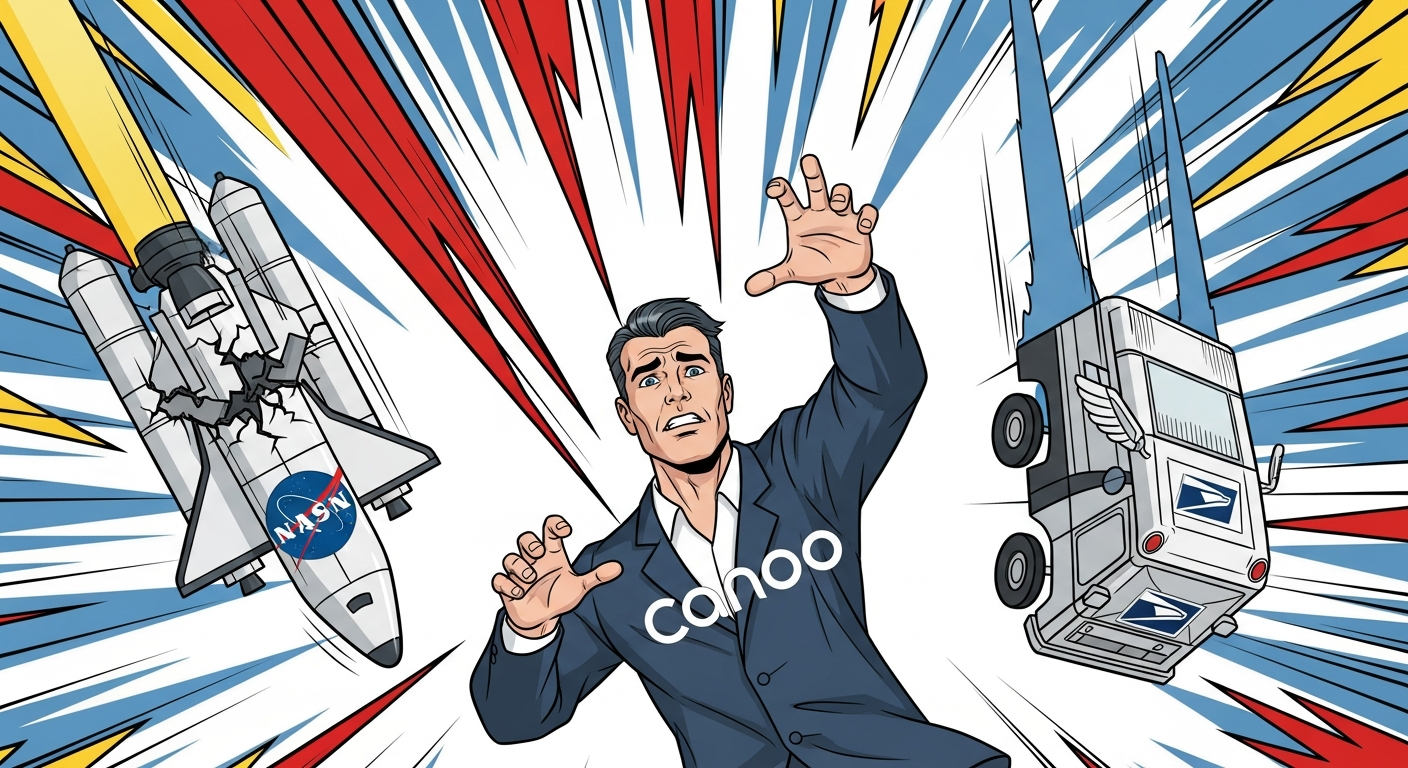
NASA and the United States Postal Service have discontinued their use of electric vehicles from bankrupt EV manufacturer Canoo, undermining former CEO Tony Aquila’s assurances of continued support for government programs. This development highlights the challenges federal agencies face when partnering with struggling startups in the volatile electric vehicle market.
NASA Shifts Away From Canoo Vehicles
In 2023, NASA acquired three electric vans from Canoo with plans to transport Artemis mission astronauts to the launchpad for upcoming Moon expeditions. However, the space agency has since abandoned these vehicles, citing that Canoo could no longer fulfill their operational requirements. NASA has pivoted to leasing Boeing’s Airstream-manufactured ‘Astrovan’ as of October, demonstrating how quickly government agencies must adapt when technology partners falter.
This transition occurred despite specific assurances from Canoo’s leadership that government contracts would receive ongoing support. The space agency’s decision reflects broader concerns about reliability and continuity of service when working with financially unstable partners, even when those partnerships involve high-profile missions like Artemis.
USPS Evaluation Program Terminated
The United States Postal Service similarly halted its Canoo vehicle program after purchasing six vehicles for evaluation earlier in 2024. In an official statement, the postal service confirmed these vehicles are no longer operational and that their evaluation process has concluded without plans for additional investment. The USPS declined to disclose specific details about their assessment results, leaving questions about the vehicles’ performance unanswered.
This decision is particularly significant given the USPS’s ongoing fleet modernization efforts and previous commitments to electrification. The postal service’s abandonment of the Canoo vehicles suggests potential concerns about vehicle reliability, maintenance challenges, or financial viability that outweighed the benefits of continuing the program.
Department of Defense Involvement Remains Unclear
Before filing for bankruptcy, Canoo had also provided at least one demonstration vehicle to the Department of Defense. The current status of this relationship remains uncertain, as the DOD did not respond to inquiries about whether they continued using the vehicle after Canoo’s financial collapse. This lack of transparency leaves an incomplete picture of how widely Canoo’s government partnerships have disintegrated.
Bankruptcy and Asset Acquisition
Canoo’s January 2025 bankruptcy filing came after prolonged financial difficulties and failure to establish market traction for its electric van products. In March, former CEO Tony Aquila made a $4 million bid to acquire the company’s assets, explicitly stating his intention to honor Canoo’s commitments to government programs as a primary motivation for the purchase.
The bankruptcy court approved Aquila’s purchase in April, despite competing interest from multiple parties. As many as eight entities signed non-disclosure agreements to evaluate Canoo’s intellectual property and assets, including Harbinger (an electric trucking company founded by former Canoo employees) and British financier Charles Garson, who reportedly offered up to $20 million for the assets.
Controversial Sale Process
The asset sale generated significant controversy, with Harbinger alleging that Canoo concealed certain assets from the sale process and that the bankruptcy trustee unfairly favored Aquila’s bid. The trustee defended the decision by arguing that Aquila presented the most reliable offer, while suggesting that other potential buyers with foreign ownership connections might trigger national security concerns with the Committee on Foreign Investment in the United States—particularly problematic given Canoo’s government contracts.
Despite Garson’s substantially higher offer of $20 million compared to Aquila’s $4 million bid, the judge determined that Garson failed to formalize his bid within the required timeframe. This decision effectively transferred Canoo’s remaining assets to Aquila at a fraction of what might have been possible through a more competitive process.
Broken Promises and Future Implications
The disconnect between Aquila’s stated commitment to supporting government programs and the agencies’ subsequent abandonment of Canoo vehicles raises questions about post-bankruptcy communication and capability. Neither NASA nor the USPS has confirmed whether Aquila approached them about continuing support for the vehicles after his acquisition of Canoo’s assets.
This case study illustrates the risks government agencies face when contracting with emerging technology companies, particularly in sectors experiencing rapid transformation and financial volatility. The experience may influence how federal procurement officials evaluate future partnerships with EV startups, potentially favoring established manufacturers with proven financial stability over innovative but financially precarious newcomers.
For the electric vehicle industry, Canoo’s failure to maintain these high-profile government relationships represents a cautionary tale about the importance of sustainable business models and the challenges of scaling production while maintaining quality and service commitments.