
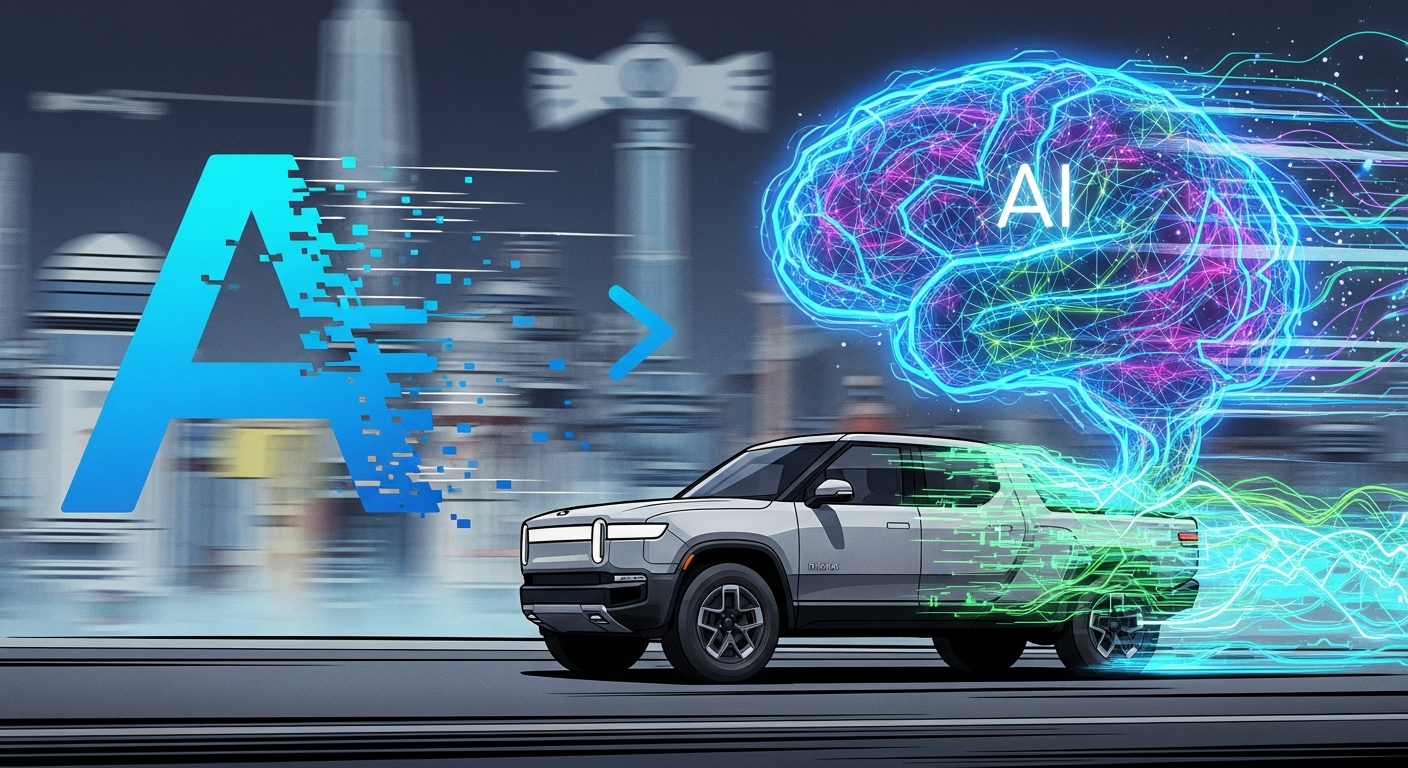
Electric vehicle manufacturer Rivian has been quietly developing its proprietary AI assistant for nearly two years, a project that remains distinct from its recently announced technology collaboration with Volkswagen. According to Rivian’s software leader Wassym Bensaid, this AI initiative represents a strategic investment rather than a hasty response to market trends, with a potential consumer release targeted for late 2024.
The company plans to reveal more details during its AI and Autonomy livestream event on December 11th at 9 am PT, potentially showcasing what could become a significant differentiator in the increasingly competitive electric vehicle market.
Strategic Development Approach
Unlike many hastily implemented automotive AI systems, Rivian’s assistant isn’t merely a conversational interface bolted onto the infotainment system. The company has invested substantial resources into creating a deeply integrated solution designed to work seamlessly with all vehicle controls and functions.
Rivian’s development team, headquartered in Palo Alto, adopted a foundational philosophy centered on flexibility. “We started with an underlying philosophy to build an overall architecture that is model and platform agnostic,” Bensaid explained in previous interviews. This approach allows Rivian to adapt to the rapidly evolving AI landscape without being locked into specific technologies or providers.
The team quickly recognized that beyond the AI models themselves, significant effort needed to be directed toward developing coordination software layers and control logic systems that could effectively manage multiple workflows and resolve potential conflicts between different AI functions. This led to what Bensaid describes as an “agentic framework” – essentially a sophisticated orchestration system that can interface with various AI models.
Technical Architecture
While specific technical details remain limited, Rivian has confirmed that its AI assistant utilizes a hybrid approach combining edge and cloud computing capabilities. This architecture strategically distributes AI processing between onboard systems and remote servers, allowing simpler tasks to be handled directly by the vehicle while more complex operations leverage cloud-based resources.
The system incorporates multiple specialized models, each handling specific tasks rather than relying on a single general-purpose AI. This multi-model approach potentially enables more precise and efficient performance across different vehicle functions.
Rivian developed much of this software stack in-house, including custom AI models and the crucial “orchestration layer” that coordinates these various components. The company did partner with external firms for certain specialized AI functions, though these relationships haven’t been publicly detailed.
Alignment with Vertical Integration Strategy
This AI assistant initiative aligns perfectly with Rivian’s broader vertical integration strategy. In 2024, the company implemented a comprehensive overhaul of its flagship vehicles – the R1T truck and R1S SUV – reimagining everything from battery systems and suspension components to the underlying electrical architecture and software interface.
The company has simultaneously invested heavily in developing its proprietary software stack, covering both real-time operating systems that manage critical vehicle functions (thermal management, safety systems, driver assistance) and the user-facing infotainment layer. This holistic approach gives Rivian greater control over the user experience and enables deeper integration between hardware and software components.
Separate from Volkswagen Joint Venture
Despite Rivian’s recent technology partnership with Volkswagen – a collaboration valued at up to $5.8 billion – the AI assistant remains a separate initiative. The joint venture, which officially began in November 2024, focuses primarily on electrical architecture, computing systems, and infotainment technology, with plans to supply these components to Volkswagen Group vehicles as early as 2027.
Autonomous driving capabilities and AI assistant technology are currently excluded from this partnership, though Bensaid hasn’t ruled out future expansion of the collaboration: “It doesn’t mean that it may not be in the future,” he noted.
Strategic Objectives
According to Bensaid, Rivian’s primary mission with this AI assistant is to increase customer trust and engagement. This suggests the company views the technology not merely as a competitive checkbox but as a fundamental enhancement to the ownership experience.
By building a deeply integrated assistant that understands vehicle systems and user preferences, Rivian appears to be positioning this technology as a key differentiator in the premium electric vehicle segment, where software experiences are increasingly important to buyers.
The December 11th event will likely provide greater clarity on specific capabilities, user interface design, and potential release timeline for this long-developing technology.