
Coreweave has weathered a rollercoaster year, establishing itself as a controversial yet pivotal player in the AI infrastructure landscape. The cloud infrastructure provider’s public debut earlier this year marked one of the most anticipated IPOs, though initial performance fell short of expectations. This setback was compounded in October when shareholders from Core Scientific, a business partner, expressed skepticism about Coreweave’s acquisition plans, ultimately derailing the proposed deal.
Navigating Post-IPO Challenges
CEO Michael Intrator addressed critics during Fortune’s AI Brainstorm summit in San Francisco, framing Coreweave’s journey as creating an entirely new business paradigm for cloud computing. The company has pioneered an innovative financing approach, using its valuable collection of Nvidia GPUs as collateral to secure funding for expansion. This unconventional strategy has raised eyebrows among traditional investors.
“I think people are myopic a lot of times,” Intrator remarked when questioned about stock volatility. He highlighted the challenging economic environment surrounding their market entry, noting, “We came out into one of the most challenging environments, right around Liberation Day and, in spite of the incredible headwinds, were able to launch a successful IPO.”
Stock Price Volatility
The company’s share price has demonstrated remarkable volatility since its $40 debut. Over eight months, it climbed beyond $150 before settling around $90 currently. This erratic movement has prompted some financial analysts to compare it to meme stocks known for dramatic price swings.
Much of this uncertainty stems from Coreweave’s substantial debt load. The company’s recent announcement of plans to issue additional debt for data center expansion triggered an 8% drop in share value. Intrator appears unfazed, positioning Coreweave as a market disruptor whose methods require adjustment time from traditional market participants.
“When you introduce a new model, when you introduce a new way of doing business, when you disrupt what has been a static environment, it’s going to take some people some time,” he explained during his summit appearance.
From Crypto Mining to AI Infrastructure Leader
Coreweave’s evolution from cryptocurrency mining operation to essential AI infrastructure provider represents one of tech’s most remarkable pivots. The company now supplies critical GPU resources to leading AI developers and has established strategic partnerships with industry giants including Microsoft, OpenAI, Nvidia, and Meta.
This transformation positions Coreweave at the center of the AI computing revolution, providing the computational backbone for many breakthrough AI applications and models. Their specialized infrastructure enables AI companies to train and deploy increasingly complex systems that would otherwise be computationally infeasible.
Addressing Industry Criticisms
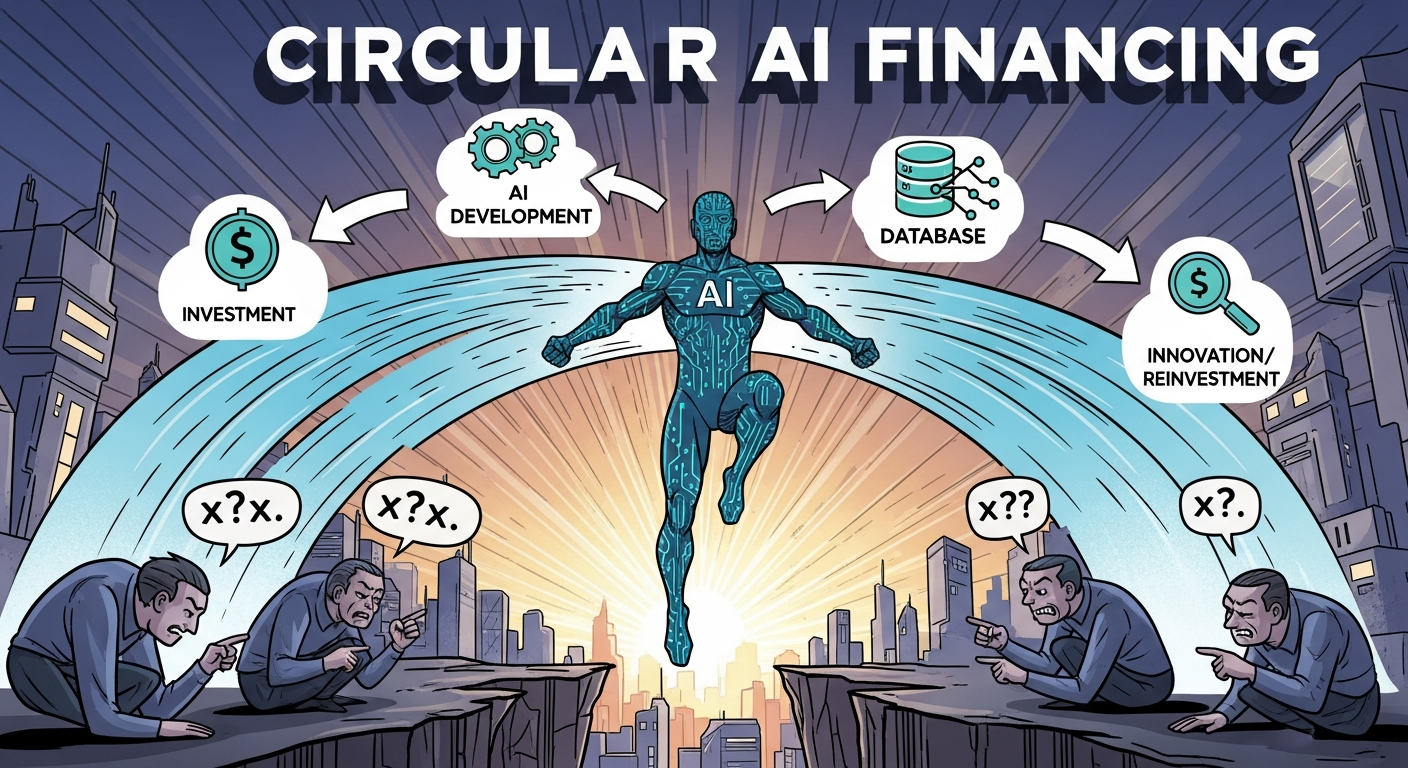
When confronted with concerns about “circularity” in the AI industry—where major players invest in each other, potentially creating artificial valuations—Intrator defended such arrangements. With Nvidia serving as both a key investor and primary GPU supplier, Coreweave benefits from these interconnected relationships.
“Companies are trying to address a violent change in supply and demand,” Intrator countered. “You do that by working together.” This perspective frames the circular investments as strategic partnerships necessary to navigate unprecedented market conditions rather than problematic financial entanglements.
Strategic Acquisitions and Expansion
Despite market turbulence, Coreweave has maintained an aggressive growth strategy through strategic acquisitions. Since going public, the company has acquired Weights and Balances, an AI developer platform, followed by OpenPipe, a startup specializing in reinforcement learning for AI agent deployment. October brought further expansion with deals to acquire Marimo, creator of an open-source notebook, and Monolith, another AI company.
These acquisitions reflect Coreweave’s ambition to build a comprehensive AI infrastructure ecosystem rather than simply providing raw computing power. By integrating developer tools, training platforms, and deployment solutions, the company aims to offer end-to-end services for AI development.
Additionally, Coreweave recently expanded its partnership with OpenAI and announced plans to enter the federal market, targeting government agencies and defense contractors with specialized cloud infrastructure solutions. This diversification strategy could provide more stable revenue streams to balance the volatility in commercial markets.
The Future Outlook
As Coreweave continues pioneering its unique approach to AI infrastructure, the company faces both significant opportunities and challenges. The exponential growth in AI computing demands creates natural tailwinds, but questions about debt sustainability, market valuation, and competitive positioning remain.
The company’s success will likely depend on its ability to balance ambitious expansion with financial discipline while continuing to innovate in a rapidly evolving market. For investors and industry observers, Coreweave represents a fascinating case study in how disruptive business models navigate traditional market expectations while building entirely new categories of technology infrastructure.