
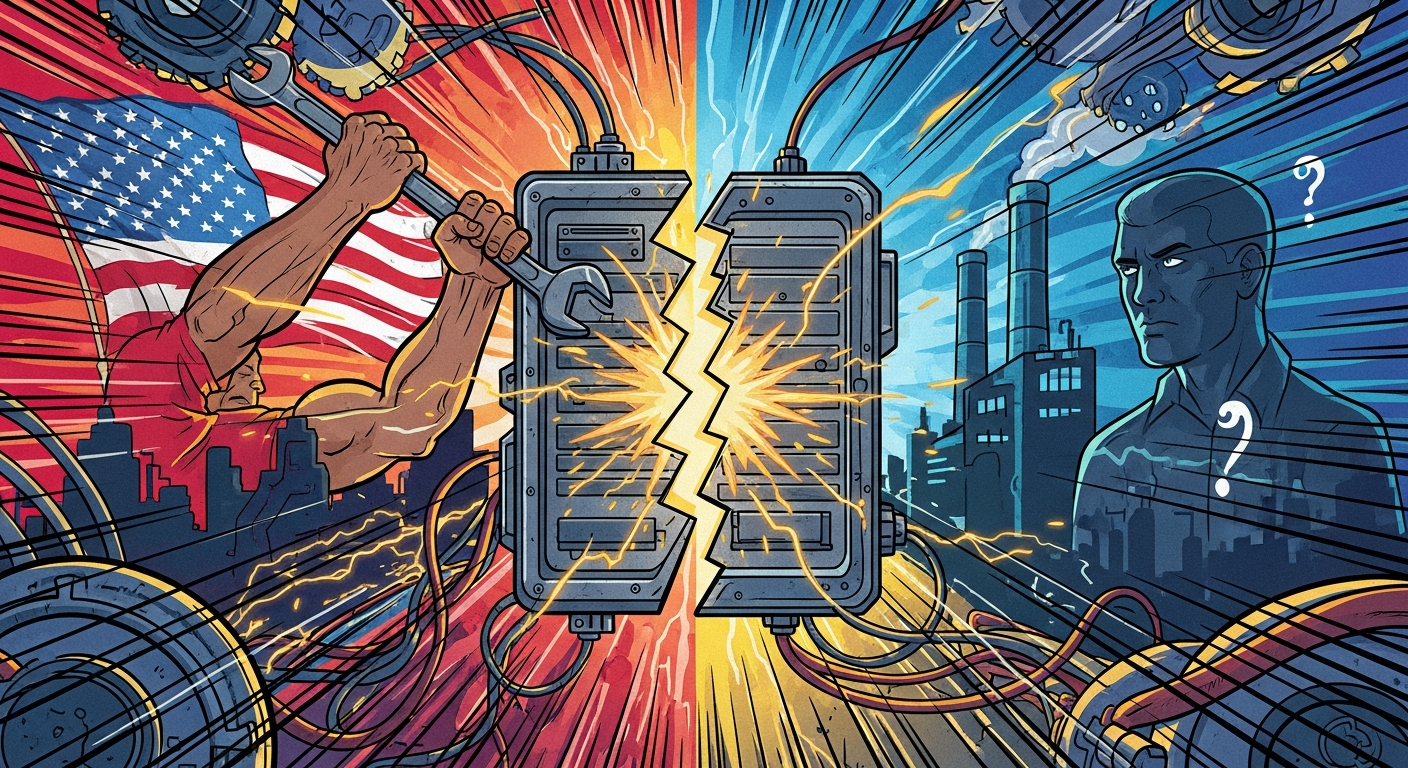
In a significant restructuring of their electric vehicle production strategy, Ford and South Korean battery manufacturer SK On have mutually agreed to terminate their $11.4 billion joint venture established in 2020. The partnership, which centered around battery production facilities in Tennessee and Kentucky, will now split operations between the two companies while maintaining a strategic alliance.
The Partnership Dissolution and Asset Division
According to an announcement made by SK On on Thursday, the dissolution agreement divides the manufacturing facilities between the two companies along geographical lines. Ford will assume complete ownership and operational control of the twin battery manufacturing plants in Kentucky. Meanwhile, SK On will take over operations at the Tennessee facility, which forms part of the extensive BlueOval SK campus.
Despite this formal separation, SK On has indicated that it will preserve a strategic partnership with Ford, particularly focused on activities at the Tennessee plant. When approached for comment, Ford representatives acknowledged SK On’s public disclosure but declined to provide additional details about the arrangement or future plans.
Market Realities Behind the Decision
The original joint venture emerged during a period of extraordinary investment in electric vehicle production capacity. In 2020, automakers and battery manufacturers were racing to build infrastructure to support ambitious EV production targets, with Ford and SK On committing $11.4 billion to develop manufacturing capabilities for next-generation electric F-Series trucks.
However, the market landscape has shifted considerably since then. While electric vehicle sales have shown consistent growth over recent years, actual consumer demand has failed to match the industry’s optimistic projections. The discontinuation of certain federal EV tax credit benefits has further slowed sales momentum, forcing manufacturers to recalibrate their production strategies and investment timelines.
Industry Context and Similar Restructurings
Ford’s decision to restructure its battery production arrangement with SK On reflects a broader industry trend. General Motors recently delayed the opening of its electric truck plant in Michigan by a year, citing slower-than-expected EV adoption rates. Similarly, Volkswagen has scaled back some of its electric vehicle targets for European markets as consumer demand growth moderates.
These adjustments highlight the complex challenges facing automakers as they balance long-term electrification strategies against short-term market realities. The capital-intensive nature of battery production facilities requires manufacturers to optimize operational structures to maintain financial viability during this transitional period.
Strategic Implications for Both Companies
For Ford, taking direct control of the Kentucky battery plants aligns with CEO Jim Farley’s recent statements about wanting greater control over critical components in the EV supply chain. The company has been actively restructuring its approach to electric vehicles, including revising its product roadmap to focus on more profitable segments and price points.
SK On, as one of the world’s leading battery manufacturers, benefits from operational control of the Tennessee facility while maintaining Ford as a key customer. This arrangement allows the battery maker to leverage its technical expertise in manufacturing while securing a significant portion of its production capacity with a major automotive client.
Future Outlook for EV Battery Production
Despite this restructuring, both companies remain committed to electric vehicle battery production in the United States. The facilities in Kentucky and Tennessee represent significant manufacturing capacity that will be crucial for meeting future EV demand as the market continues to develop.
Industry analysts suggest this reorganization may actually improve operational efficiency by allowing each company to focus on its core competencies. Ford gains direct control over battery production for its Kentucky operations, while SK On can optimize manufacturing processes at the Tennessee plant based on its extensive battery production expertise.
The continued strategic partnership between the companies indicates that both recognize the importance of collaboration in the EV space, even as they adjust the formal structure of their relationship to better address current market conditions.
Broader Industry Implications
This dissolution represents a significant shift in how automakers and battery suppliers structure their relationships. The original joint venture model was widely adopted across the industry as companies sought to share the substantial investment costs and risks associated with building new battery production facilities.
As the electric vehicle market matures, we may see more companies reconfiguring these arrangements to provide greater flexibility and operational control. The Ford-SK On restructuring could serve as a template for other automotive-battery partnerships facing similar market adjustments.
What remains clear is that despite short-term fluctuations in demand, the long-term trajectory toward vehicle electrification continues. Both Ford and SK On are positioning themselves to navigate the current market environment while maintaining the production capacity needed for future growth.