
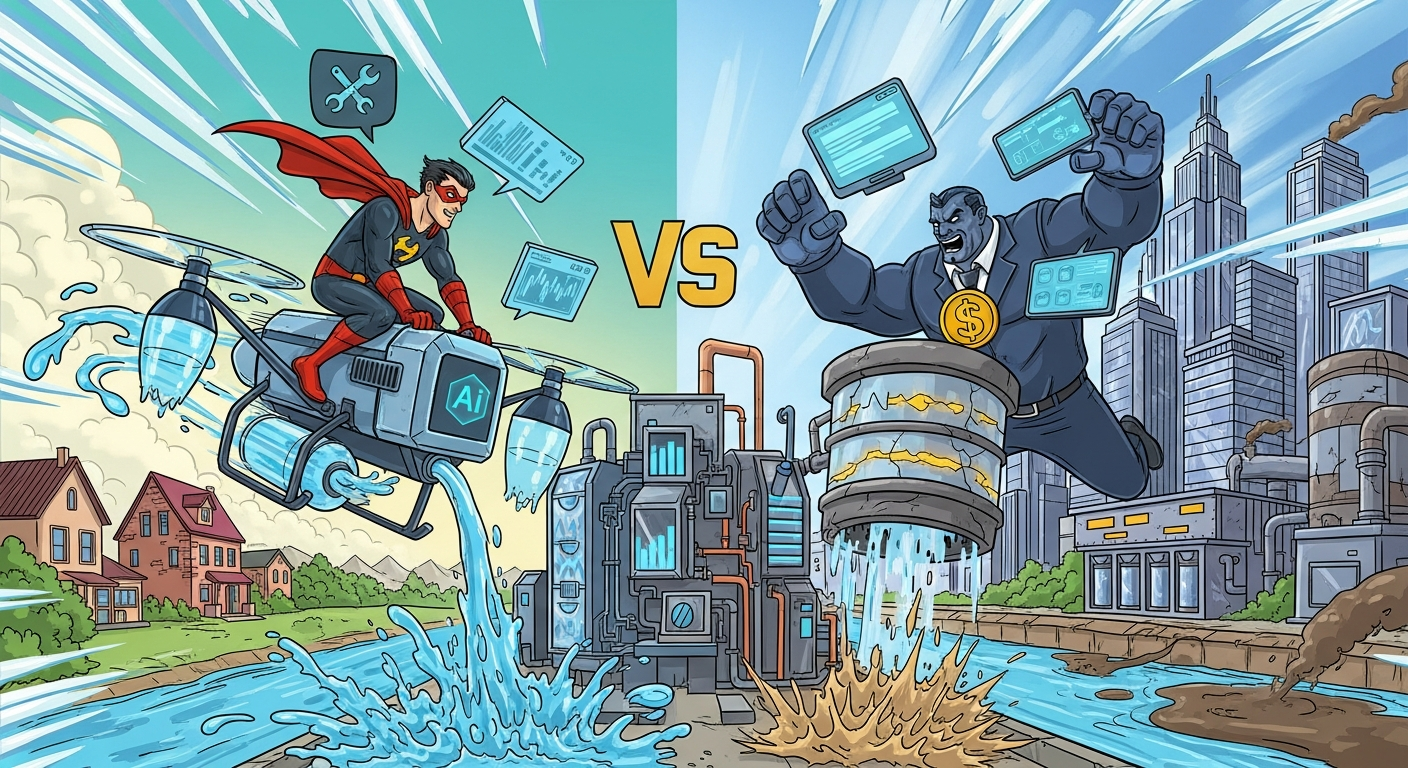
A recent controversy has erupted over the water consumption of artificial intelligence, highlighting the challenges in accurately reporting environmental impacts of emerging technologies. Karen Hao, author of ‘Empire of AI,’ recently acknowledged a significant error in her book regarding a Google data center in Chile. She had claimed it would use “more than one thousand times the amount of water consumed by the entire population” – a figure that was apparently off by a factor of 1,000 due to a unit conversion mistake.
This correction came after Andy Masley, who heads an effective altruism organization in Washington, DC, questioned the figures in his viral Substack post titled “The AI Water Issue Is Fake.” Masley’s investigation into media reporting on AI’s water usage began after encountering widespread concern at social gatherings where people expressed guilt about using tools like ChatGPT due to perceived environmental impacts.
Understanding How Data Centers Use Water
Data centers primarily use water for cooling their processors, which generate significant heat during operation. The cooling process typically involves circulating water that absorbs heat and then transfers it to cooling towers where some water evaporates. This creates a fundamental trade-off: using more water reduces electricity needs, while using more electricity reduces water consumption but increases greenhouse gas emissions.
Professor Fengqi You from Cornell University, who researches sustainable data center placement, emphasizes that water requirements vary dramatically based on location, climate, cooling technology, and energy sources. “Every location and every state is different,” You explains. “How much water you will need for the same amount of AI depends on the climate, depends on the technology used, depends on the energy mix.”
Further complicating matters, some calculations include indirect water usage from power generation – similar to Scope 2 emissions accounting for carbon – which can substantially increase the estimated water footprint. However, Jonathan Koomey, a computing researcher and co-author of a Lawrence Berkeley National Laboratory paper on AI and water, questions whether this approach makes sense since we rarely apply it to other industries.
Contextualizing AI’s Water Usage
One of Masley’s central arguments is that AI’s water consumption should be viewed in context of other industries. A single hamburger requires approximately 400 gallons of water to produce, while a cotton T-shirt needs more than 700 gallons. America’s 16,000 golf courses each use between 100,000 to 2 million gallons daily. For comparison, Google reports its most water-intensive data center in Iowa consumes about 2.7 million gallons per day, with most facilities using significantly less.
In Arizona, where data center growth is booming despite water scarcity, there are over 370 golf courses irrigated in desert conditions – often with minimal public concern. This comparison raises important questions about how we allocate resources and which industries face environmental scrutiny.
However, experts caution against dismissing water concerns entirely. “In the near term, it’s not a concern and it’s not a nationwide crisis,” says Professor You, “but it depends on location. In locations that have existing water stress, building these AI data centers is gonna be a big problem.”
The Geographic Reality of Water Scarcity
Unlike carbon emissions, which contribute to global climate change regardless of where they occur, water usage impacts are intensely local. A data center that functions sustainably in a water-rich region might create significant problems in an area already experiencing drought or aquifer depletion.
The Google data center project in Chile that Hao referenced illustrates this complexity. While her figures were likely exaggerated, the facility would still have consumed a substantial portion of local water supplies in a region experiencing its 15th consecutive year of unprecedented drought. Google ultimately paused and then halted the project after a court ordered reconsideration of climate change impacts on the aquifer.
This highlights how water scarcity is becoming an increasingly critical issue across the American West and globally. A 2023 New York Times investigation found groundwater reservoirs throughout the United States – not just in traditionally drought-prone areas – are being depleted at unsustainable rates, threatening both drinking water supplies and economic activity.
The Value Judgment Behind Water Concerns
Koomey suggests that public concern about AI’s water usage reflects deeper questions about how we price public resources for private use, especially as resource availability changes over time. “Part of what we’re seeing with water is that the rules and the norms and the prices are set based on a previous reality,” he notes. “It does all come back to this question, of what is the value of the service being delivered?”
This perspective helps explain why people who don’t think twice about water-intensive activities like eating beef or buying new clothes might still object to AI’s water usage. The reaction may reflect a value judgment about whether AI’s benefits justify its environmental costs – particularly as tech companies make grand promises about AI’s transformative potential while seeking policy concessions and economic support.
Unlike established industries, AI development is being presented as both inevitable and revolutionary – capable of solving humanity’s greatest challenges while potentially disrupting employment across sectors. This combination of promised benefits and potential risks naturally invites greater scrutiny of environmental impacts.
The Need for Transparency and Accurate Reporting
One consistent challenge in assessing AI’s environmental impact is the lack of transparency from companies developing these technologies. Many use non-disclosure agreements to shield basic operational information from public view. When Google’s water usage in Oregon was requested by a newspaper, the company fought disclosure through months of legal battles, claiming the information constituted a “trade secret.”
Even when companies do share information, it often lacks important context. When OpenAI CEO Sam Altman stated that an “average” ChatGPT query used “roughly one fifteenth of a teaspoon” of water, he didn’t define what constitutes an average query or clarify whether this figure included water used during model training.
This highlights the importance of both accurate reporting by journalists and greater transparency from AI companies. As these technologies reshape our economy and society, understanding their full environmental implications becomes increasingly vital – not to halt progress, but to ensure development occurs in environmentally responsible ways.