
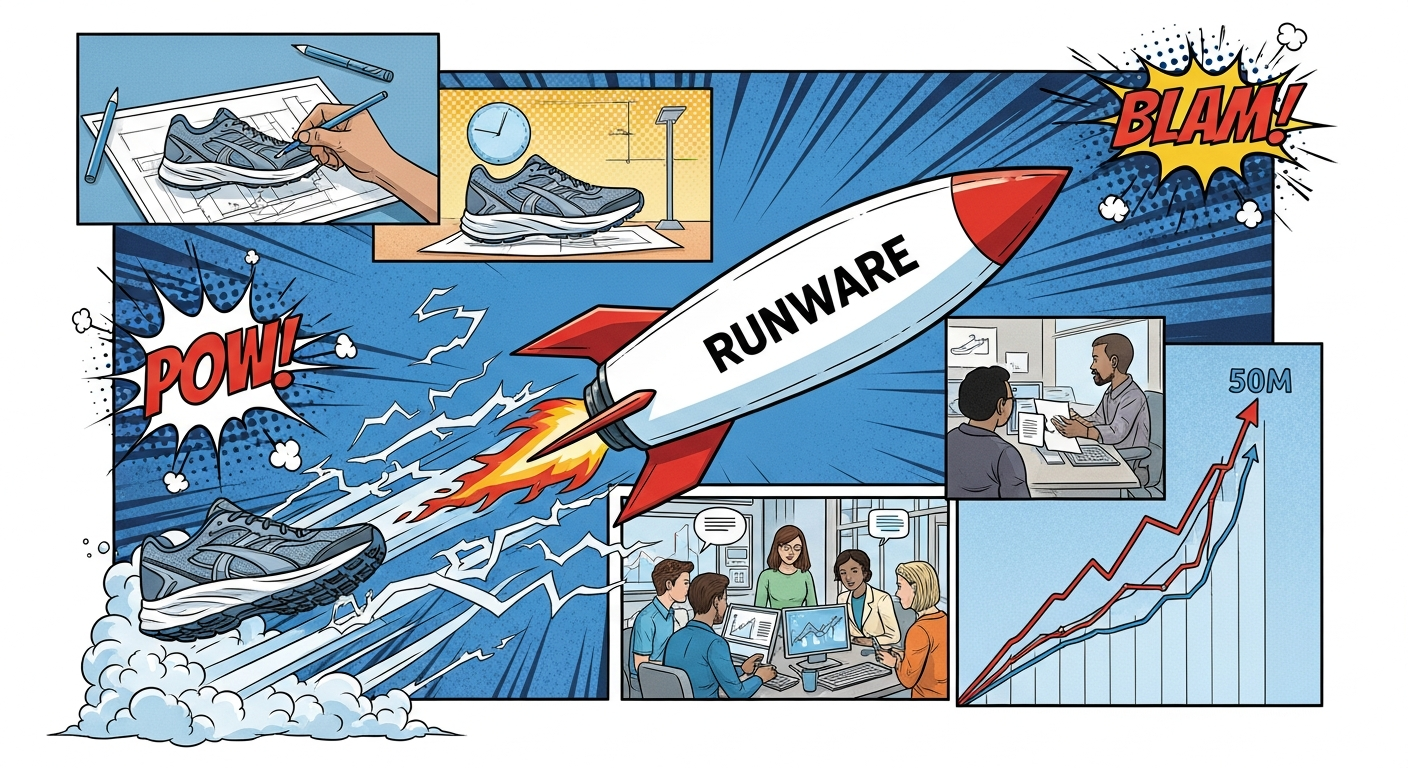
In 2023, while experimenting with text-to-image technology, Flaviu Radulesc identified a critical gap in the generative AI landscape: despite impressive capabilities, image generation was frustratingly slow. This observation led Radulesc to partner with Ioana Hreninciuc and establish Runware, a developer tool platform designed specifically to overcome this limitation.
Runware has quickly positioned itself as a powerhouse in real-time generation of images, videos, and audio through its innovative API infrastructure. The company’s growth metrics speak volumes about its market penetration – supporting over 5 billion creations for more than 100,000 developers since launch.
Runware’s Technological Edge
The platform’s core value proposition centers on simplicity and performance. Developers can integrate Runware’s unified API into their applications to generate various media assets through a single interface, eliminating the need to build or maintain separate infrastructures. This streamlined approach allows immediate access to cutting-edge AI models – what the company refers to as ‘day-zero access’ – meaning developers can utilize new models as soon as they’re released.
At the heart of Runware’s technical advantage is its custom-built Sonic Inference Engine, which operates on specialized AI hardware. This proprietary technology enables the platform to optimize model loading and offloading processes, supporting an impressive 400,000+ models with real-time inference capabilities. The company further enhances reliability by partnering with third-party AI cloud providers, creating a system that automatically reroutes workloads when additional memory resources are required.
Significant Funding Milestone
Runware recently announced a substantial $50 million Series A funding round led by Dawn Capital, with Dawn Capital Partner Shamillah Bankiya joining the board. Additional participants included Insight Partners and a16z Speedrun. This latest investment brings Runware’s total funding to $66 million, providing considerable resources for expansion.
The influx of capital will primarily support infrastructure expansion, with ambitious plans to scale the Sonic Inference Engine to power over 2 million models. Hreninciuc, who oversees operations and go-to-market strategy, articulated the company’s ultimate vision: becoming the universal API for all AI, creating an ecosystem where any generative AI model can operate on their platform.
Competitive Differentiation in a Hot Market
The developer tools market for AI-generated media has become increasingly competitive, attracting significant venture capital interest. Fal.ai recently secured $140 million at a $4.5 billion valuation, focusing on offering a wide variety of models rather than optimizing for speed.
Runware distinguishes itself through its pricing model and technical approach. While competitors like Hugging Face, Replicate, and Together AI typically charge based on GPU compute time, Runware employs a cost-per-image generated model. This approach aligns with services like Stable Diffusion and Flux, allowing customers to pay specifically for what they use rather than purchasing blocks of computing time.
According to Hreninciuc, this pricing strategy makes high-performance AI more accessible and affordable, benefiting both application developers and end users by enabling applications to scale to millions of users while maintaining healthy profit margins.
Growth Strategy and Future Directions
With the new funding secured, Runware has outlined several strategic priorities. Beyond expanding its infrastructure capabilities, the company plans to venture into new AI modalities and significantly grow its team from the current headcount of approximately 25 employees.
The expansion aims to support Runware’s ambitious technical roadmap while maintaining its competitive edge in performance and pricing. By making powerful AI more globally accessible, Runware is positioning itself as both a technical enabler and market democratizer in the rapidly evolving generative AI landscape.
For developers seeking to incorporate real-time AI-generated media into their applications without the overhead of managing complex infrastructure, Runware represents an increasingly compelling option in a market where speed, cost-efficiency, and simplicity are paramount considerations.
Market Impact and Broader Implications
Runware’s approach addresses one of the most significant barriers to widespread AI implementation: the computational resources required for real-time generation. By optimizing this process through specialized infrastructure, the company is helping to make generative AI practical for applications where immediate response is crucial to user experience.
The platform’s unified API strategy also reduces the technical complexity for developers, potentially accelerating the adoption of generative AI across various industries and use cases. As AI capabilities continue to advance rapidly, infrastructure solutions like Runware may become increasingly important in translating theoretical AI capabilities into practical, scalable applications.