
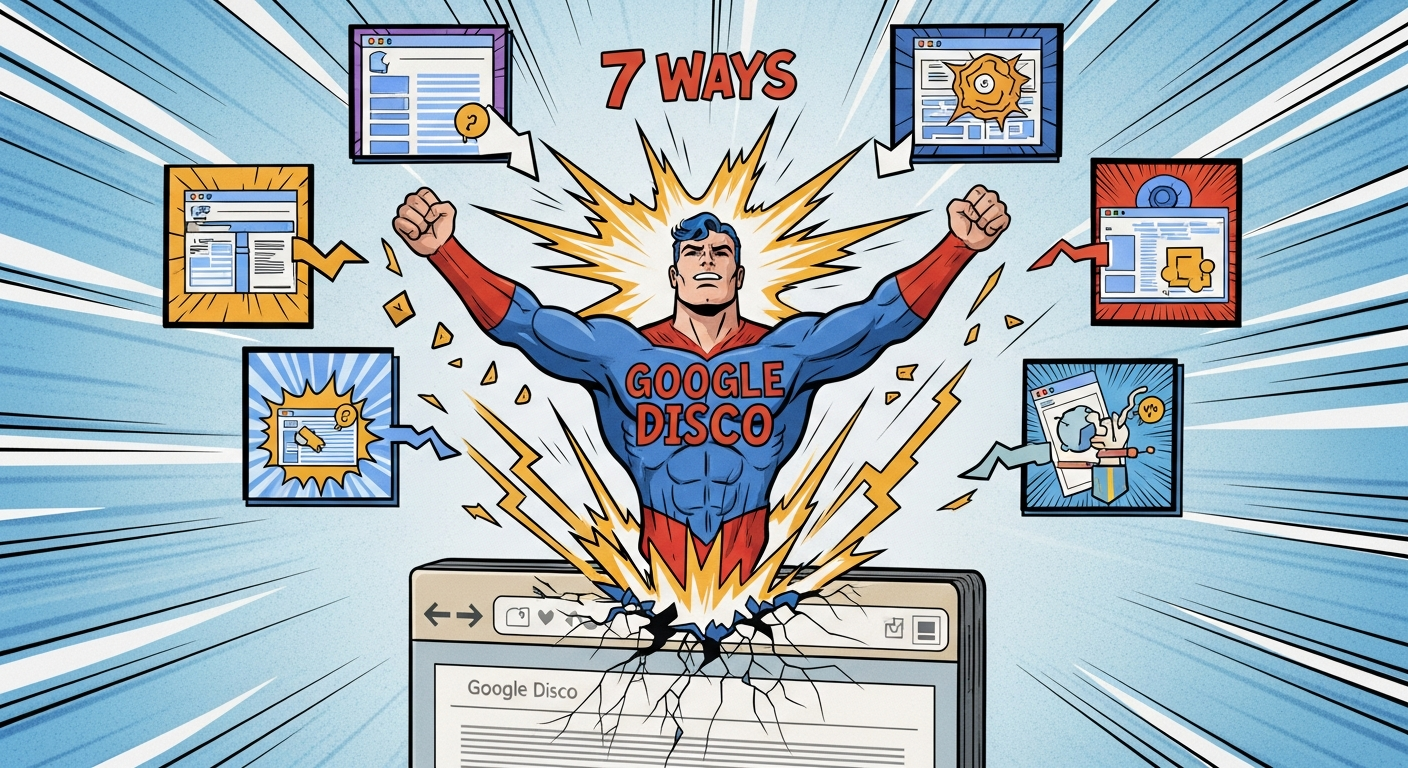
Google has launched an innovative AI experiment called ‘Disco’ that fundamentally changes how we interact with browser tabs. Powered by Gemini 3, this new tool transforms your open tabs into customized web applications that help complete tasks related to your browsing activity. While currently available to a limited group of testers through Google Labs, Disco represents a significant evolution in AI-assisted browsing that could reshape our digital workflows.
What Are GenTabs and How Do They Work?
The core feature of Disco is called ‘GenTabs’ – proactively suggested interactive web applications that analyze your browsing patterns and create custom tools to help you accomplish your goals. Unlike traditional AI chatbots that simply answer questions, GenTabs builds functional mini-applications that process information across multiple tabs.
GenTabs leverages Gemini 3’s advanced capabilities to understand context from both your current browser tabs and previous Gemini chat history. This comprehensive approach allows it to create more relevant and useful applications. For example, if you’re researching quantum physics across several academic websites, GenTabs might suggest creating a visualization tool that illustrates complex concepts in an interactive format.
What’s particularly powerful is that these applications aren’t static – users can refine them through natural language commands, making them increasingly tailored to specific needs. Google has also emphasized that all generative elements created within GenTabs will properly attribute and link back to original sources, addressing common concerns about AI and proper citation.
Practical Applications of GenTabs
The potential use cases for Disco’s GenTabs span numerous everyday scenarios where information synthesis is valuable. For students, GenTabs could transform research across multiple academic sources into interactive study guides or concept maps. A medical student reviewing various anatomy resources could receive a suggested application that creates an interactive 3D model highlighting the relationships between different biological systems.
For home cooks, GenTabs might analyze recipe tabs to create a comprehensive meal planning application that consolidates ingredients, adjusts portions, and generates a consolidated shopping list. Travel planning becomes more efficient when GenTabs can process information from airline sites, hotel reviews, and attraction listings to generate a cohesive itinerary with budget tracking.
Professional applications are equally promising. Marketers researching competitors could receive a GenTab that compares features, pricing, and positioning across multiple products. Financial analysts reviewing market reports might get custom data visualization tools that highlight trends across different economic indicators.
Google’s Strategic AI Browser Integration
Disco represents Google’s distinctive approach to AI-enhanced browsing. Rather than creating a standalone AI browser like Perplexity’s Comet or ChatGPT Atlas, Google is integrating these capabilities directly into the Chrome browsing experience. This strategy leverages Chrome’s massive user base while enhancing the browser’s functionality.
The approach also demonstrates Google’s focus on task completion rather than just information retrieval. While many AI tools focus on answering questions about specific content, GenTabs addresses the broader goal of what users are trying to accomplish across multiple tabs. This holistic view of user intent represents a more sophisticated understanding of how people actually use browsers for complex tasks.
Google has indicated that successful features developed through the Disco experiment may eventually be incorporated into other Google products with wider distribution. This suggests Disco serves as both a standalone innovation and a testing ground for features that could eventually reach Chrome’s billions of users.
Accessing Disco and Future Development
Currently, Disco is available through a limited testing program. Interested users can join a waitlist to download the application, which is initially launching on macOS. Google has positioned GenTabs as just the