
{
“title”: “Waymo Initiates Software Recall to Address School Bus Safety Concerns”,
“content”: “
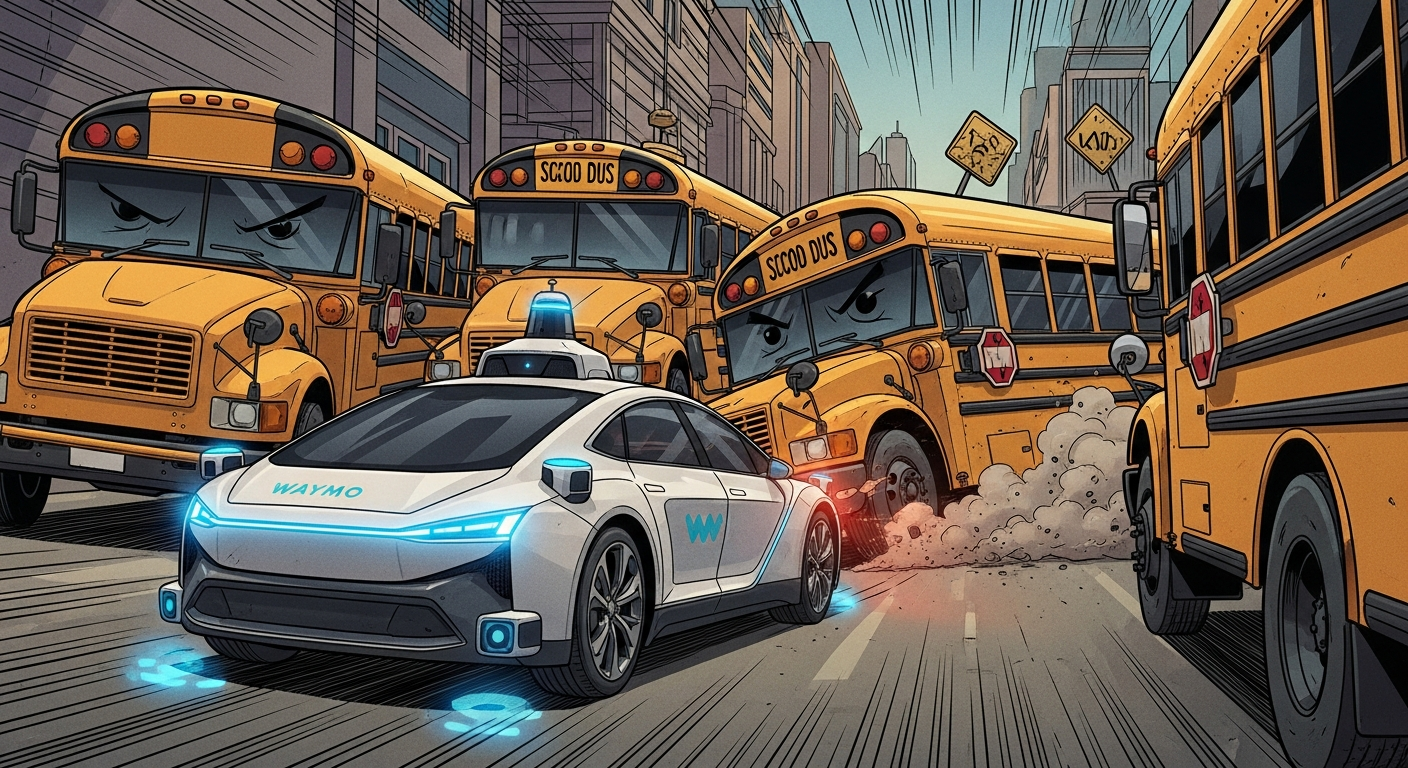
Alphabet’s autonomous driving subsidiary Waymo is taking proactive steps to address concerns about how its self-driving vehicles interact with school buses. The company has announced plans to voluntarily file a software recall with the National Highway Traffic Safety Administration (NHTSA) early next week, focusing specifically on improving how its robotaxis operate around school buses during student loading and unloading.
This move comes in response to increased regulatory scrutiny and public criticism following incidents in Atlanta and Austin where Waymo vehicles were observed navigating around stopped school buses with warning signals activated. The company implemented software updates on November 17 to address these issues, claiming the improvements have elevated performance beyond human driver standards in these specific scenarios.
Incidents That Prompted Regulatory Action
NHTSA’s Office of Defects Investigation launched an inquiry into Waymo in October after footage emerged showing one of the company’s autonomous vehicles maneuvering around a stopped school bus in Atlanta. In this concerning incident, the robotaxi crossed in front of the bus while its stop sign was extended and warning lights were flashing – precisely when children were disembarking.
The situation escalated when similar incidents were reported in Austin, Texas, where Waymo operates a partnership with Uber. According to documentation available on NHTSA’s website, Austin School District officials reported that Waymo vehicles illegally passed school buses at least 19 times this year, with five of these incidents allegedly occurring after Waymo had already implemented software improvements.
These reports prompted NHTSA to send a formal request to Waymo on December 3, seeking detailed information about its fifth-generation self-driving system and operational protocols. The agency’s involvement highlights the serious safety implications of autonomous vehicle interactions with school transportation.
Software Recalls in the Age of Autonomous Vehicles
The concept of software recalls has become increasingly common as vehicles – particularly autonomous ones – rely more heavily on code than mechanical components for critical operations. Unlike traditional recalls requiring physical repairs at service centers, software recalls typically involve over-the-air updates that can be deployed rapidly across an entire fleet.
Waymo has already implemented the necessary software fixes prior to the official recall filing, which is standard practice in the industry. However, the formal filing with federal regulators carries significant weight, as it creates an official record and ensures regulatory oversight of the remediation process.
This isn’t Waymo’s first experience with software recalls. The company issued multiple voluntary recalls earlier this year, including one following an incident in Phoenix where an unoccupied Waymo vehicle collided with a telephone pole during a low-speed maneuver in an alley.
Waymo’s Response and Safety Commitment
Waymo Chief Safety Officer Mauricio Peña addressed the situation in a statement, acknowledging that despite the company’s strong safety record – claiming twelve times fewer pedestrian injury crashes than human drivers – there was room for improvement in how their vehicles handle school bus scenarios.
“Holding the highest safety standards means recognizing when our behavior should be better,” Peña stated. “We have made the decision to file a voluntary software recall with NHTSA related to appropriately slowing and stopping in these scenarios.”
The company emphasized that no injuries occurred in relation to the vehicle behaviors addressed by this recall. Waymo has also committed to ongoing analysis of vehicle performance and implementing additional updates as needed, reinforcing its stated commitment to continuous safety improvement.
Implications for the Autonomous Vehicle Industry
This recall highlights the complex challenges facing autonomous vehicle companies as they navigate the intricate landscape of real-world driving scenarios. School bus interactions represent a particularly sensitive area given the involvement of children and the special traffic rules that apply.
The incident also demonstrates how regulatory frameworks are evolving to address emerging technologies. NHTSA’s involvement shows that autonomous vehicles are being held to rigorous safety standards, with companies expected to proactively address potential issues rather than waiting for accidents to occur.
For Waymo and other autonomous vehicle developers, these challenges underscore the importance of comprehensive testing in diverse real-world scenarios. The ability to identify edge cases – like school bus interactions – and rapidly deploy improvements will be crucial for maintaining public trust and regulatory approval as these technologies continue to expand.
Looking Forward
Waymo has indicated it will continue investigating, tracking, and implementing updates as needed. This approach of continuous improvement will be essential as autonomous vehicle technology matures and encounters increasingly complex driving scenarios.
The incident serves as a reminder that despite impressive technological achievements, autonomous vehicles still face significant challenges in interpreting and responding to the nuanced rules and social norms of road safety – particularly when it comes to protecting our most vulnerable road users.
“,
“excerpt”: “Waymo is voluntarily filing a software recall with NHTSA to address how its autonomous vehicles operate around school buses. Following incidents in Atlanta and Austin where robotaxis improperly passed stopped school buses, the company has implemented software updates aimed at exceeding human driver performance in these critical safety scenarios.”,
“tags”: [“Waymo”, “autonomous vehicles”, “software recall”, “school bus safety”, “NHTSA”, “robotaxis”, “self-driving cars”, “regulatory compliance”]
}