
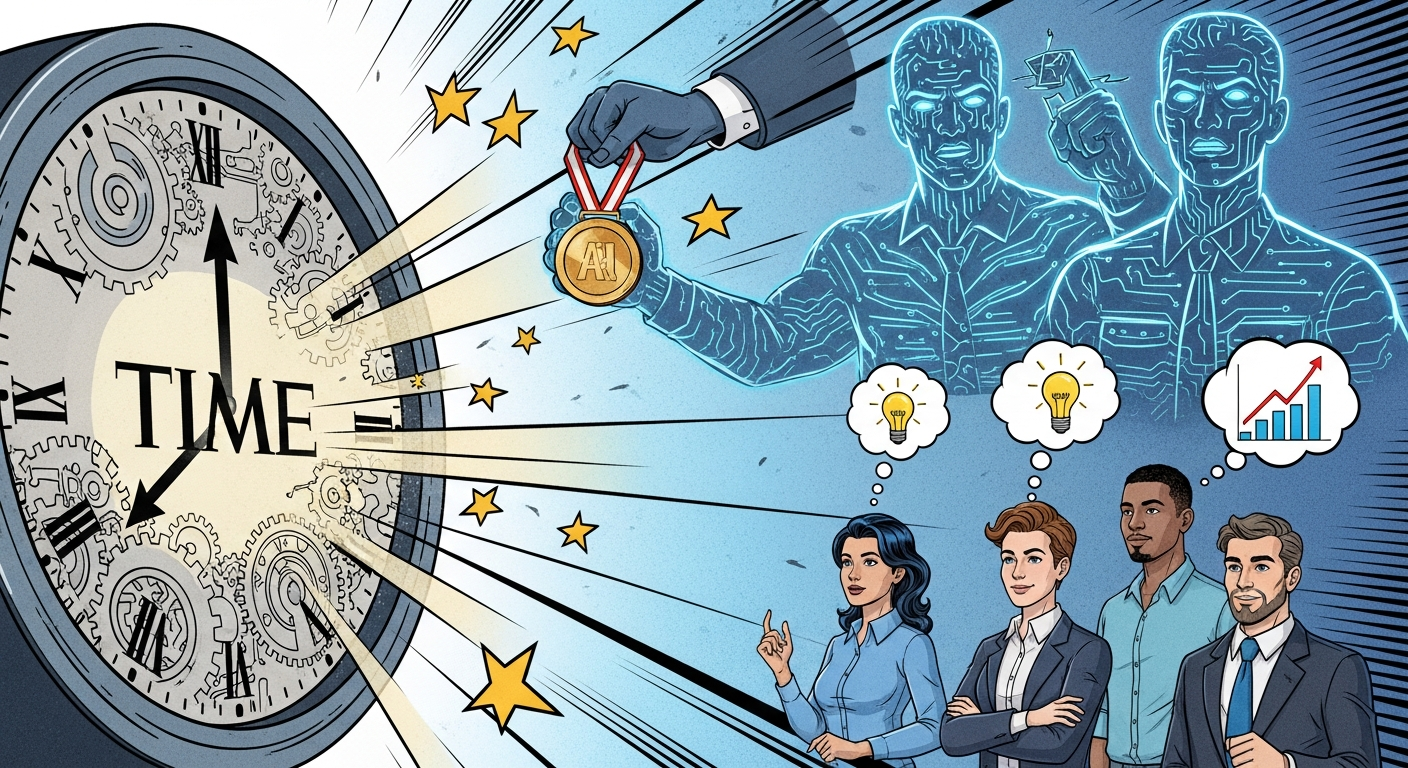
TIME Magazine has revealed its 2025 Person of the Year selection, breaking from tradition by honoring not an individual but a collective: the ‘Architects of AI.’ This group comprises American tech executives who are driving the global artificial intelligence revolution, marking a significant recognition of how AI has dominated global discourse and development throughout the year.
The selection reflects the profound impact these leaders have had on technology, policy, economics, and society at large. As artificial intelligence continues to inspire both optimism and widespread concern, TIME’s choice acknowledges the transformative power these executives wield in shaping humanity’s future.
Breaking Tradition: From Individuals to Collective Influence
TIME’s Person of the Year, established decades ago, traditionally recognizes individuals who have most significantly influenced world events, whether positively or negatively. Recent recipients illustrate this range: President Donald Trump received the designation twice, including last year, while Taylor Swift earned recognition in 2023 for her economic impact through the Eras Tour. Historical selections have included controversial figures like Adolf Hitler in 1938, demonstrating TIME’s commitment to recognizing influence rather than virtue.
The 2025 selection represents a strategic pivot, highlighting how AI development has become a collaborative yet competitive endeavor among tech giants. According to TIME’s announcement, ‘For decades, humankind steeled itself for the rise of thinking machines. Leaders striving to develop the technology, including Sam Altman and Elon Musk, warned that the pursuit of its powers could create unforeseen catastrophe […] This year, the debate about how to wield AI responsibly gave way to a sprint to deploy it as fast as possible.’
The Tech Titans Behind the AI Revolution
The magazine’s cover features prominent industry leaders who have shaped AI’s rapid advancement. These include Nvidia CEO Jensen Huang, whose company’s chips power much of today’s AI infrastructure; OpenAI’s Sam Altman, whose ChatGPT transformed public perception of AI capabilities; Tesla and SpaceX CEO Elon Musk; Meta’s Mark Zuckerberg; AMD CEO Lisa Su; Anthropic co-founder Dario Amodei; Google DeepMind CEO Demis Hassabis; and Stanford professor and World Labs founder Fei-Fei Li.
These executives represent companies that have collectively invested hundreds of billions of dollars in AI development, creating what TIME describes as ‘one of the biggest physical infrastructure projects of all time.’ Their efforts have not only accelerated technological advancement but also reshaped government policies and intensified geopolitical competition in the AI space.
AI’s Unprecedented Global Impact
TIME’s coverage emphasizes the profound implications of AI technology: ‘This is the story of how AI changed our world in 2025, in new and exciting and sometimes frightening ways. It is the story of how Huang and other tech titans grabbed the wheel of history, developing technology and making decisions that are reshaping the information landscape, the climate, and our livelihoods.’
The magazine draws a striking parallel to another transformative technology, noting that ‘AI emerged as arguably the most consequential tool in great-power competition since the advent of nuclear weapons.’ This comparison underscores the magazine’s view of AI as a technology with civilization-altering potential.
Public Sentiment and Economic Anxiety
TIME’s selection aligns with growing public concern about AI’s implications. Recent Edelman data suggests that while a small minority view AI with optimism, the majority of people associate it with economic anxiety and uncertainty. These concerns range from job displacement to ethical questions about AI decision-making and potential misuse.
The rapid commercialization and deployment of AI tools have outpaced regulatory frameworks in many regions, creating a landscape where technological advancement and societal safeguards are increasingly at odds. The ‘sprint to deploy’ mentality highlighted by TIME reflects the competitive pressure driving companies to prioritize market position over cautious implementation.
Behind the Announcement
Interestingly, the announcement itself became a story when images of the magazine cover leaked on prediction market Polymarket the evening before the official reveal. This premature exposure generated significant online discussion, with social media users debating the merits of recognizing tech executives amid ongoing concerns about AI’s societal impact.
TIME’s official announcement on Thursday morning confirmed what many had already seen: the tech industry’s AI leaders collectively earning the magazine’s most prestigious annual recognition, cementing 2025 as the year artificial intelligence moved from theoretical concern to practical reality in countless domains.
The Future Implications
By selecting the ‘Architects of AI’ as Person of the Year, TIME acknowledges that we stand at a pivotal moment in technological history. The decisions made by these executives—regarding AI safety, access, capabilities, and governance—will likely influence human society for generations to come.
As these leaders race ‘both beside and against each other,’ their competition drives innovation while raising critical questions about who benefits from AI advancement and who bears its costs. TIME’s recognition serves both as acknowledgment of their achievement and as a spotlight on their responsibility to ensure that artificial intelligence serves humanity’s best interests.