
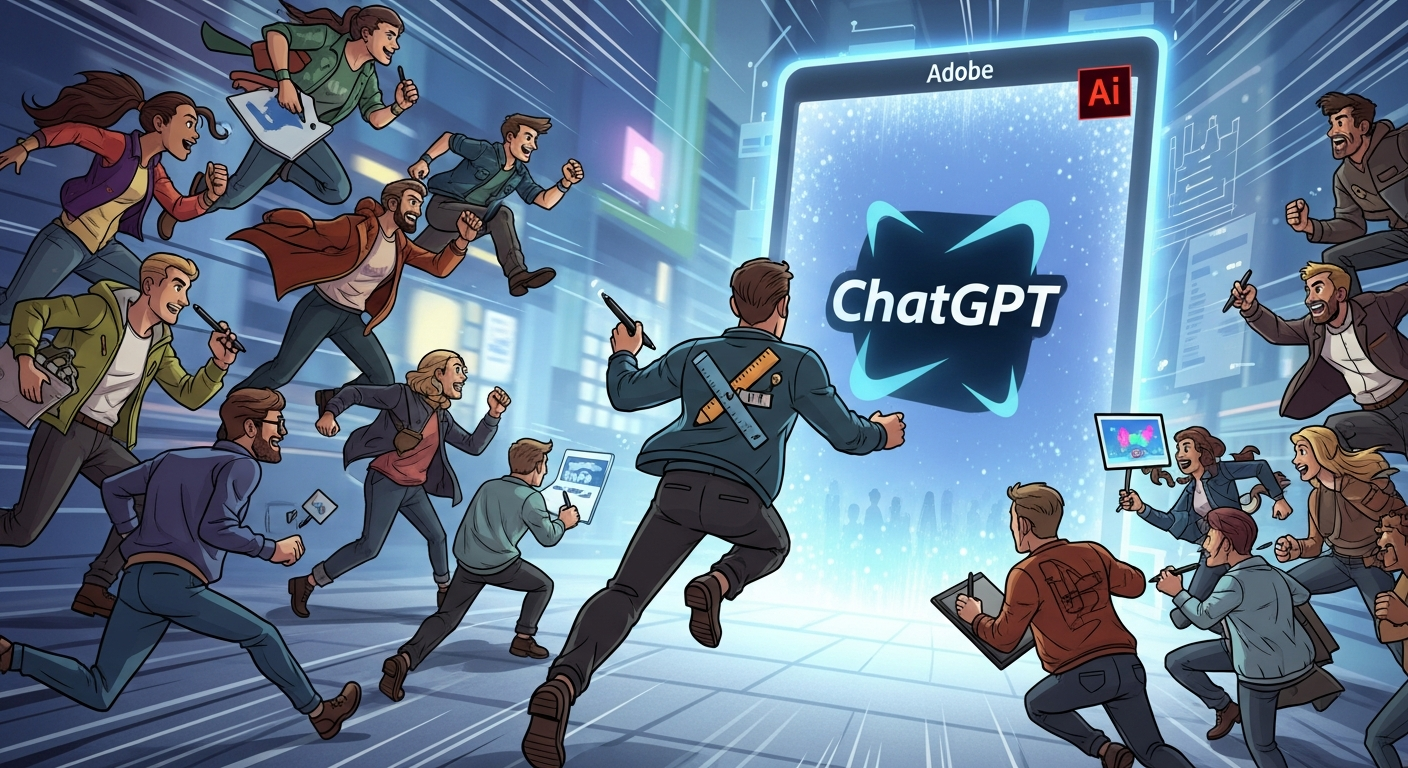
Adobe has taken a significant leap forward in its AI integration strategy by embedding core features from its flagship applications directly into OpenAI’s ChatGPT platform. This strategic move, announced on Wednesday, allows ChatGPT users to access powerful editing capabilities from Photoshop, Express, and Acrobat without leaving the chatbot interface, creating a seamless creative workflow powered by conversational AI.
How Adobe’s Integration Works Within ChatGPT
The new integration enables users to perform sophisticated editing tasks through simple conversational prompts. When using Photoshop within ChatGPT, users can request specific image modifications such as selective area editing, background removal or blurring, and adjustments to exposure and contrast parameters. The system even provides interactive sliders to fine-tune effect intensities, giving users precise control over their edits.
Adobe Express functionality within ChatGPT focuses on design creation and modification. Users can access Adobe’s extensive design library, create themed visual content, add animation effects to static elements, and make comprehensive design edits—all through natural language commands rather than navigating complex menus.
For document management, Acrobat’s integration allows ChatGPT users to handle PDF files directly, with capabilities including file merging, text extraction and editing, table manipulation, and various other document processing functions that previously required dedicated software.
Availability and Platform Support
Adobe has made these integrations available globally across multiple platforms. Desktop users and iOS users can access all three Adobe applications within ChatGPT, while Android users currently have access only to Adobe Express functionality. Adobe has indicated that Photoshop and Acrobat support for Android will be coming in future updates.
This cross-platform approach demonstrates Adobe’s commitment to meeting users wherever they work, rather than forcing them into a single ecosystem. The seamless transition between ChatGPT and native Adobe applications is particularly noteworthy—if users encounter limitations within the ChatGPT interface, they can continue their work directly in the full Adobe applications with a single click.
Strategic Positioning in the AI Creative Landscape
This integration represents the latest development in Adobe’s aggressive AI strategy. Earlier in October, the company launched dedicated AI assistants for both Express and Photoshop, while also previewing Project Moonlight—an ambitious cross-application assistant designed to work across Adobe’s entire Creative Cloud suite.
Adobe’s move comes at a critical time in the creative AI landscape. OpenAI began supporting third-party applications within ChatGPT in October, launching with integrations for Canva, Spotify, Expedia, and Figma. This creates an interesting competitive dynamic, particularly between Adobe and Canva, as both now offer image editing capabilities directly within ChatGPT.
For users who don’t have established preferences between competing creative platforms, these integrations create an opportunity to experiment with professional-grade tools through a familiar conversational interface. This could potentially drive new user acquisition for Adobe as ChatGPT users discover the power of Photoshop or Express through casual interactions.
Business Model and Partnership Considerations
While details about the financial arrangement between Adobe and OpenAI remain undisclosed, this integration raises interesting questions about revenue sharing and partnership structures. It’s unclear whether OpenAI receives compensation for featuring Adobe’s tools prominently within ChatGPT or if Adobe pays for placement within the popular AI platform.
For Adobe, the strategic value extends beyond immediate revenue. By embedding its tools within one of the world’s most widely-used AI interfaces, Adobe potentially reaches millions of users who might otherwise never explore professional creative software. This