
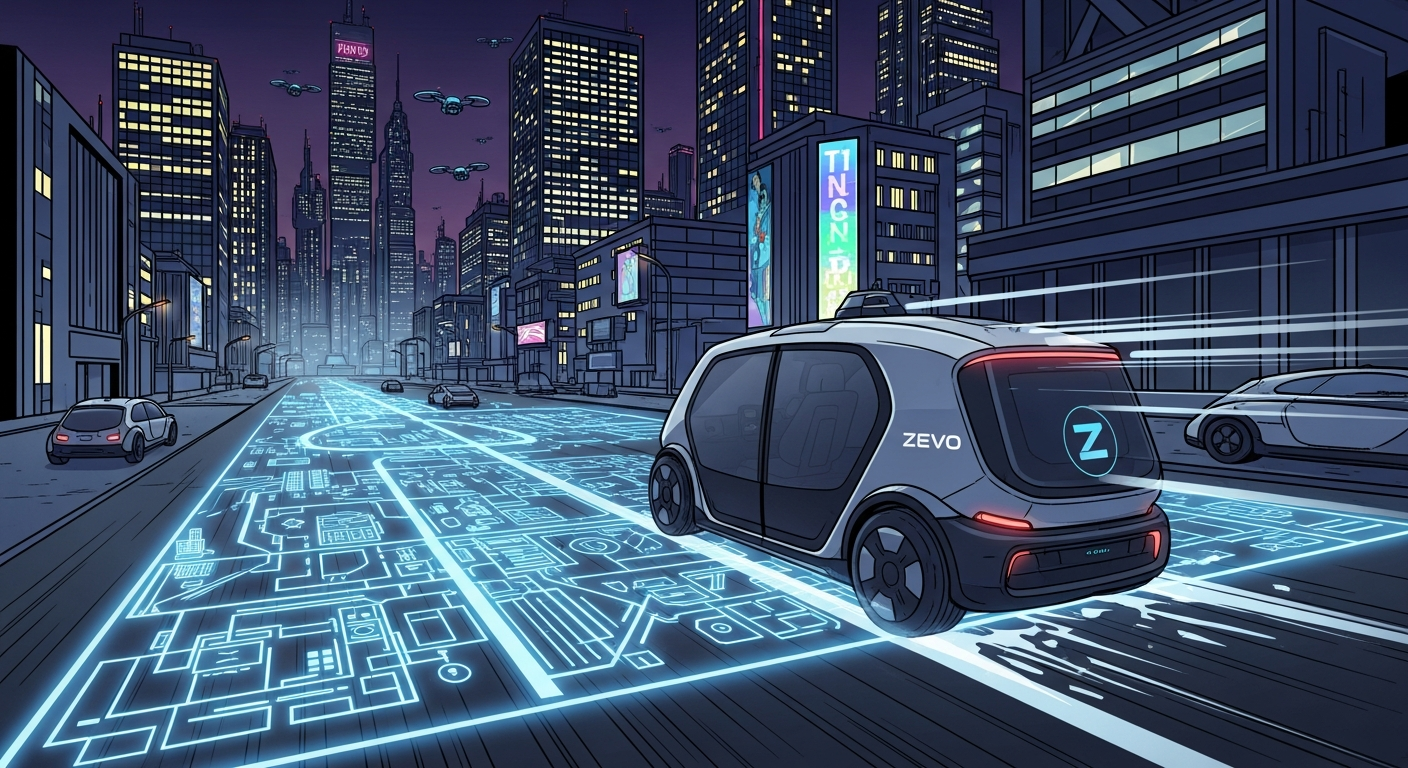
Autonomous vehicles have made the leap from science fiction to reality, with companies like Waymo already operating commercial robotaxi services across multiple urban centers. This technological breakthrough has sparked a race among established automakers and ambitious startups to bring self-driving capabilities to consumer vehicles within the next few years. As this technology matures, the question becomes: what practical applications will emerge for personally-owned autonomous vehicles?
The Expanding Landscape of Autonomous Vehicle Ownership
The potential uses for personal autonomous vehicles extend far beyond basic transportation. Imagine dispatching your car to collect takeout or complete errands while you focus on other tasks—a concept being developed by startup Autolane. Tesla’s Elon Musk envisions a more entrepreneurial application, suggesting owners could deploy their vehicles into ride-sharing networks when not in personal use, creating passive income opportunities with minimal effort.
This convergence of autonomous technology and sharing economics has attracted innovative companies like Dallas-based Zevo, which has operated an electric vehicle car-sharing fleet for over a year. Zevo is now expanding into the robotaxi space through a partnership with an emerging autonomous vehicle manufacturer called Tensor.
Tensor: A Bold New Player in the Autonomous Market
Tensor represents an interesting case study in the autonomous vehicle landscape. The company emerged earlier this year with roots in AutoX, a China-based autonomous driving technology firm. What distinguishes Tensor is its ambitious claim to become the first company to sell fully autonomous vehicles directly to consumers—with a target date of 2026.
Zevo has announced plans to purchase up to 100 Tensor vehicles for integration into its sharing network. This partnership would effectively create a distributed robotaxi service, allowing Zevo customers to access self-driving vehicles through the company’s platform.
While the announcement echoes similar promises made during the initial autonomous vehicle hype cycle a decade ago, the current landscape offers more credibility. With functional robotaxis already operating in several cities, these ambitious plans seem more achievable than their predecessors.
The Vision Behind the Partnership
Tensor’s Chief Business Officer, Hugo Fozzati, articulated the company’s mission as creating a future where everyone has access to their own form of Artificial General Intelligence—specifically through autonomous vehicles that provide greater freedom and time savings. For Tensor, the Zevo partnership represents more than a vehicle sale; it creates opportunities for individuals and small entrepreneurs to participate in and profit from the autonomous vehicle industry.
Calculated Risks and Integration Challenges
Zevo’s founder, Hebron Sher, has demonstrated a willingness to partner with unproven manufacturers. In October, the company announced a non-binding order for 1,000 electric vans from Faraday Future—a startup with a decade-long struggle to bring products to market. Faraday has pivoted to importing and assembling more affordable electric vans from China, with initial production scheduled to begin soon.
Sher cites two primary motivations for these partnerships with emerging manufacturers. First, cost considerations: companies with limited track records often offer more favorable financial terms. Second, and perhaps more critically, these newer manufacturers demonstrate greater flexibility in software integration—a crucial factor for peer-to-peer vehicle sharing platforms, particularly when autonomous capabilities are involved.
According to Sher, legacy automakers present significant challenges in terms of software integration, with technology he describes as substandard. The collaborative environment between startups allows for joint solution development that would be difficult to achieve with established manufacturers.
Mutual Benefits and Future Implications
The Tensor-Zevo partnership potentially benefits both companies: Tensor secures an early customer and an opportunity to demonstrate its autonomous vehicle capabilities, while Zevo gains favorable terms and the deep software integration necessary for its business model.
Sher acknowledges this approach involves calculated risk but frames it within the context of entrepreneurial innovation. The partnership represents a microcosm of the broader autonomous vehicle industry—where established players with substantial resources compete against nimble startups willing to take greater risks for potentially transformative rewards.
As autonomous vehicle technology continues to mature, these kinds of partnerships between emerging companies may accelerate adoption by creating alternative pathways to market that bypass traditional automotive industry constraints. Whether these specific companies succeed or fail, they represent an important experimental approach to bringing autonomous vehicle technology to consumers.