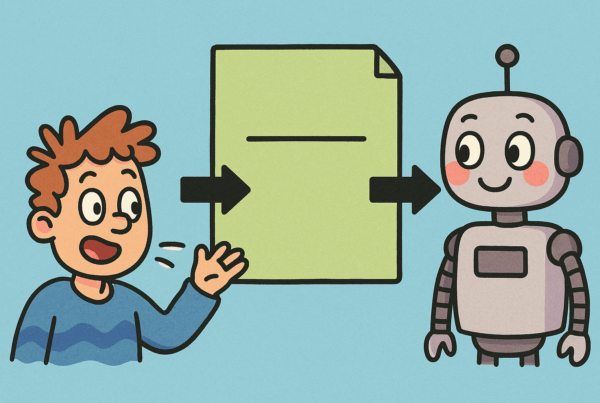
The small bakery in Portland wasn’t failing—it was merely existing. For three generations, the Millers had kneaded dough and decorated cakes using techniques passed down through yellowing recipe cards. Then Sarah Miller, the reluctant heir to the flour-dusted kingdom, installed a simple inventory management AI. Within weeks, waste dropped by 37%. By the third month, they’d implemented predictive ordering that anticipated weekend rushes with uncanny precision. ‘We’re not just surviving anymore,’ Sarah told me, brushing crumbs from her apron. ‘We’re planning for expansion.’
This transformation represents the new reality for small and medium businesses across America: AI adoption is no longer a futuristic luxury but an immediate necessity for survival. The gap between AI-enhanced operations and traditional methods widens daily, creating what economists call a ‘digital divide’ that increasingly determines which businesses thrive and which quietly disappear.
Month One: Assessment and Foundation
The journey toward AI integration begins not with technology but with introspection. ‘Most businesses rush to implement sophisticated AI solutions without understanding their actual needs,’ explains Dr. Elena Vasquez, digital transformation specialist at MIT’s Sloan School of Management. ‘They’re essentially building a house without blueprints.’
The first month of modernization should focus on systematic assessment. Document your current workflows, identify bottlenecks, and quantify inefficiencies. Which repetitive tasks consume disproportionate employee time? Where do errors most frequently occur? What data do you already collect but fail to leverage?
For Midwest manufacturing firm Hartwell Industries, this assessment revealed that employees spent an average of 22 hours weekly on manual data entry—work that could be automated through basic AI tools. ‘We were bleeding productivity in places we couldn’t even see,’ admits CEO Robert Hartwell. ‘Our people were doing robot work while the actual value they could provide went untapped.’
This month should also include digital literacy training for key team members. Resistance to AI often stems not from technophobia but from legitimate concerns about job security and skill relevance. Address these fears directly by framing AI as augmentation rather than replacement. The goal isn’t fewer humans but more human work.
Month Two: Targeted Implementation
With assessment complete, the second month focuses on implementing specific AI solutions matched to your highest-priority needs. For small and medium businesses, this rarely means custom-built systems. ‘The democratization of AI has created an ecosystem of affordable, subscription-based tools that require minimal technical expertise,’ says Alisha Patel, founder of SMB Digital Advisors.
Begin with what technology analysts call ‘low-hanging fruit’—processes where AI can deliver immediate returns with minimal disruption. Customer service chatbots, automated appointment scheduling, inventory optimization, and basic document processing represent accessible starting points. Each implementation should follow a consistent pattern: small pilot, measurement, adjustment, and gradual expansion.
For family-owned Riverdale Logistics, this meant starting with AI-powered route optimization for their fleet of delivery vehicles. ‘We reduced fuel costs by 22% in the first six weeks,’ says operations manager James Chen. ‘The system paid for itself before we’d even finished implementation.’
This phase should also include establishing data governance protocols. AI systems require quality data to function effectively, making data collection and management increasingly valuable business assets. Develop clear policies for data storage, access, and usage that balance operational needs with privacy considerations.
Month Three: Integration and Culture Shift
The final month transitions from isolated AI implementations to integrated systems and cultural transformation. ‘Individual AI tools deliver incremental improvements,’ observes Dr. Vasquez. ‘The transformative power emerges when these systems communicate with each other, creating intelligent workflows across the organization.’
This integration phase often reveals unexpected opportunities. When Henderson Real Estate connected their customer relationship management system with their property assessment AI, they discovered patterns in client preferences that allowed for personalized property recommendations. Conversion rates increased by 41%.
More profound than technological integration is the cultural shift toward data-driven decision making. Small and medium businesses have traditionally relied on intuition and experience—valuable assets that now function best when augmented by analytical insights. This requires not just new tools but new mental models.
‘The greatest challenge isn’t implementing the technology,’ explains Patel. ‘It’s developing the organizational capacity to continuously adapt as AI capabilities evolve. The businesses that thrive don’t just adopt AI—they develop ‘AI-readiness’ as a core competency.’
Beyond the Three Months
The true measure of successful modernization isn’t the technology implemented but the capabilities developed. For Sarah Miller’s bakery, the initial inventory system eventually led to AI-assisted recipe development that combined traditional family techniques with data-driven ingredient optimization. ‘We’re still bakers,’ she insists. ‘The AI just helps us bake better.’
This pattern repeats across industries: automation strategies that begin by eliminating drudgery ultimately enhance creativity. The accountant freed from manual data entry develops more nuanced tax strategies. The marketing team liberated from content scheduling devises more innovative campaigns.
The three-month modernization plan isn’t a destination but the beginning of an ongoing evolution. As AI capabilities accelerate, the businesses that thrive will be those that develop institutional muscles for continuous adaptation. They recognize that in the emerging economy, the competitive advantage isn’t just efficiency but adaptability—the capacity to rapidly incorporate new capabilities as they emerge.
As I left the bakery, Sarah handed me a box containing their newest creation—an AI-suggested combination of cardamom, orange, and dark chocolate. ‘The computer recommended the ingredients,’ she said with a smile, ‘but we still had to figure out how to make it delicious.’ In that distinction lies the future of work: machines handling the calculable while humans explore the frontiers of creativity and judgment. The most successful modernization plans recognize that the goal isn’t to become more machine-like, but to become more distinctly human.